Fort Raleigh National Historic Site
National Historic Site · NC
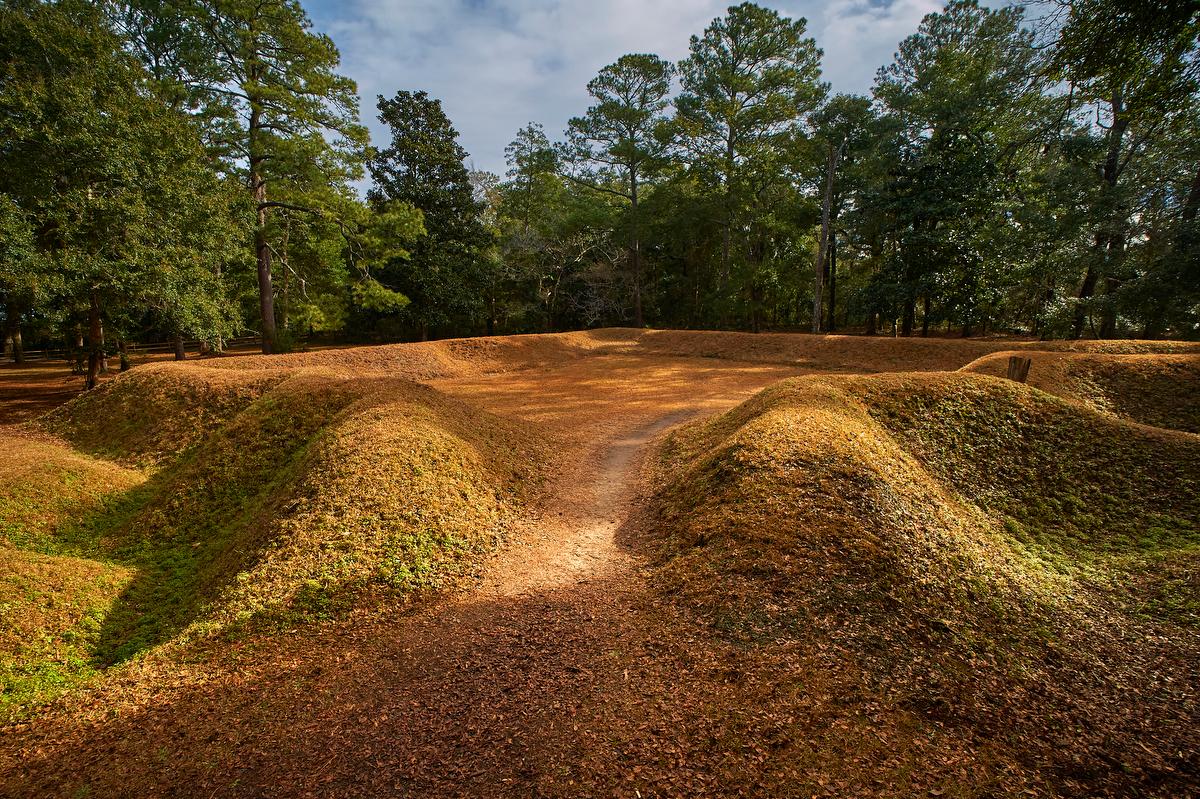
Amongst the shallow blue waters of the Outer Banks lies Fort Raleigh on Roanoke Island. Shaped by constant winds of change, Fort Raleigh has become a focal point of American history. From the first Algonquian-speaking people to the first English colonies, from formerly enslaved people starting anew to an inventor testing new radio technology, this island continues to be a place to forge new paths.
- NPS site
- nps.gov/fora
- Location
- Fort Raleigh National Historic Site (35.933, -75.715)
Track your visit to Fort Raleigh National Historic Site
NP Tracker keeps a record of every National Park Service unit you visit — all 430-plus of them. Log visits with dates and photos, collect passport stamps, plan trips, and watch your map fill in. It's free.
Passport stamp locations
- Lindsay Warren Visitor Center
Hours
Park Groundstoday: All Day
- Sun Nov 22All Day
- Mon Nov 23All Day
- Tue Nov 24All Day
- Wed Nov 25All Day
- Thu Nov 26All Day
- Fri Nov 27All Day
- Sat Nov 28All Day
The grounds are open for visitation 24 hours a day.
Hours are retrieved from the National Park Service and can change without notice — check the official site before you go.
When to go
Busiest in June, warmest in July
Busiest in June, quietest in January.
Each month is its median across 2021–2025: the middle year’s figure, so one unusual year doesn’t skew it. Recreation visitors only. Typical, not a forecast for your dates. Source: NPS Stats.
Warmest in July (86° / 73°), coolest in January (51° / 36°).
Average daily high and low, °F, and monthly precipitation, 1991–2020, measured at Manteo AP, 2 km away, 4 m up. Typical, not a forecast for your dates. Source: NOAA climate normals.
Visitor centers
1
- Lindsay Warren Visitor Centertoday: 9:00AM - 5:00PMDirections
Self-guided tours
1
A Tour Through Time1–2 hours · 9 stops
Explore the many layers of history at Fort Raleigh while enjoying the unique maritime forest and beautiful views of the water.
Entrance fees
No entrance fee.