Hawaii Volcanoes National Park
National Park · HI
Park Closure · Hilina Pali Road Shoulder Work Scheduled 9/14/26 to 11/19/26
Hilina Pali Road beyond the Maunaiki Trailhead will be closed to motorized vehicles on September 14, 2026 from 6 a.m. to 4:30 p.m. Monday through Thursday for shoulder work. Hikers, bicyclists and backcountry permit holders will be given access but should expect delays while heavy machinery works on the road. The entire road will be open to all use outside of those hours including weekends and holidays. The work is expected to be complete by November 19, 2026.
Park Closure · Keanakākoʻi Side of Kīlauea Volcano Closed Due to Volcanic Unrest
Due to increased earthquakes below the summit of Kīlauea and volcanic unrest, the Keanakākoʻi area is temporarily closed for safety. This includes old Crater Rim Drive, the overlooks near Keanakākoʻi crater and Crater Rim Trail to Keanakākoʻi crater. Devastation parking lot remains open.
Park Closure · Kīpukapuaulu Trail Closed Due to Hazardous Trees and Hanging Limbs
Kīpukapuaulu Trail remains closed due to numerous hazardous trees and hanging limbs resulting from several recent storms. Managers are developing a plan and will reopen the trail when it is safe.
Park Closure · Mauna Loa Road Closed Past Second Cattle Guard for Tree Removal
Mauna Loa Road will be closed to all use from the second cattle guard (about two miles past Kīpukapuaulu) to Mauna Loa Lookout for tree removal starting September 23 through October 29, 2026. The tree work will prepare the area for the Mauna Loa Road Rehabilitation Project. Vehicles, bicyclists and pedestrians will not be allowed during the closure.
Caution · Protect Yourself from Volcanic Tephra
Volcanic ash, rock and glassy strands (tephra) is present at Kīlauea summit and can irritate your skin, eyes and respiratory system. For your safety, do not handle it. Eye protection, long sleeves, long pants, a hat, closed-toe shoes and a dust mask are recommended.
3 noticesfrom the National Park Service
Information · Kīlauea eruption
Volcanic eruptions can be hazardous. Stay out of closed areas and monitor air quality. Eruptions can last a few hours and are often separated by pauses lasting several weeks.
More informationInformation · Sulphur Banks Bridge Closed; Boardwalk is Open
The Sulphur Banks Bridge is damaged and closed until further notice. The Haʻakulamanu area, boardwalk and Sulphur Banks Trail are open and accessible from the west side near Steam Vents.
Information · Upper Kahuku Road Closed Beyond Boot Decontamination Station
Upper Kahuku Road remains closed beyond the boot decontamination station due to storm damage. The Visitor Contact Station and most trails in the Kahuku Unit are now open following Hurricane Lala. Kahuku Road above the Lower Palm Trailhead is deeply rutted by the recent heavy rains. A 4WD is recommended to access areas above the Lower Palm Trailhead.
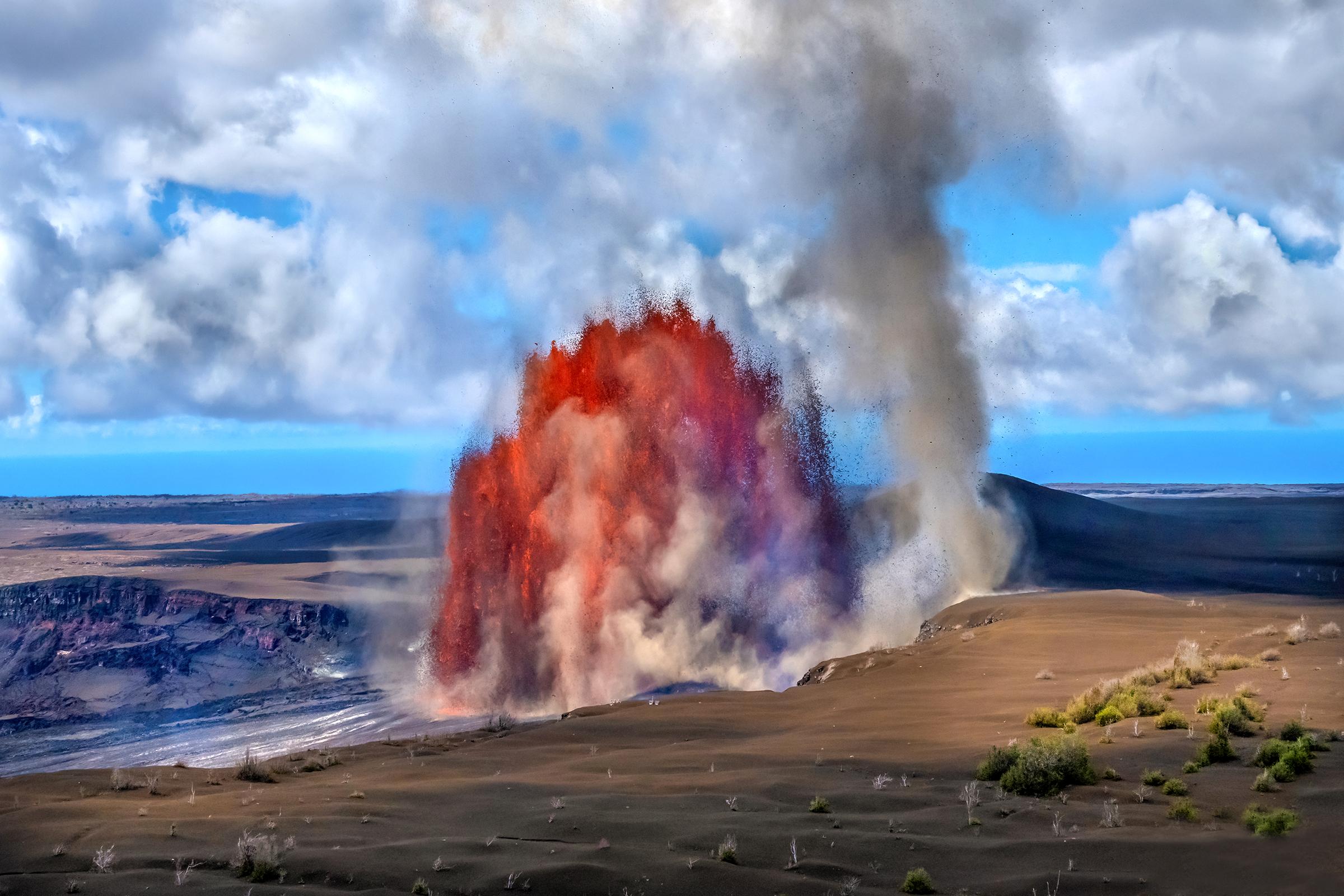
Hawai‘i Volcanoes National Park protects some of the most unique geological, biological, and cherished cultural landscapes in the world. Extending from sea level to 13,680 feet, the park encompasses the summits of two of the world's most active volcanoes - Kīlauea and Mauna Loa - and is a designated International Biosphere Reserve and UNESCO World Heritage Site.
- NPS site
- nps.gov/havo
- Location
- Hawaiʻi Volcanoes National Park (19.336, -155.470)

Track your visit to Hawaii Volcanoes National Park
NP Tracker keeps a record of every National Park Service unit you visit — all 430-plus of them. Log visits with dates and photos, collect passport stamps, plan trips, and watch your map fill in. It's free.
Passport stamp locations
- Kahuku Visitor Contact Station
- Kīlauea Visitor Center
- Welcome Center
Hours
Hawai‘i Volcanoes National Parktoday: All Day
- Sat Oct 3All Day
- Sun Oct 4All Day
- Mon Oct 5All Day
- Tue Oct 6All Day
- Wed Oct 7All Day
- Thu Oct 8All Day
- Fri Oct 9All Day
Hawai‘i Volcanoes National Park is open 7 days a week, 24 hours a day including holidays.
Kahuku Unittoday: 8:00AM - 4:00PM
- Sat Oct 38:00AM - 4:00PM
- Sun Oct 4
Visitor centers
2
- Kahuku Visitor Contact Stationtoday: 8:00AM - 4:00PMDirections
- Welcome Centertoday: 9:00AM - 4:45PMDirections
Self-guided tours
6
A First Visit1–4 hours · 7 stops
If you have limited time to spend in the park, see these sites around the summit of Kīlauea first!
Driving Tour of Chain of Craters Road1–4 hours · 10 stops
This exceptionally scenic drive traverses the flanks of Kīlauea down to the sea. On the way, it passes amazing geological and cultural sites including its namesake pit craters, dramatic cliffs, and petroglyphs. This tour is meant to be done in a vehicle, with options for three short hikes or walks along the way.
Driving Tour of Crater Rim Drive1–5 hours · 6 stops
Crater Rim Drive traverses the eastern portion of the summit caldera of Kīlauea, passing by incredible geological phenomena, cultural sites, and breathtaking vistas of one of the world's most active volcanoes. This tour is meant to be done in a vehicle, with options for three short hikes.
Hiking Tour of Kīpukapuaulu1–2 hours · 11 stops
This trail reveals a story of struggle and survival for some of rarest plants and animals of Hawaiʻi. Plant picking is prohibited in this Special Ecological Area (SEA). Dogs, horses, and bicycles are prohibited on this trail.
Entrance fees
3
- Private Vehicle — $30.00
Private Vehicle Pass - The private vehicle pass admits the passholder and up to 14 passengers of a single, private (non-commercial) vehicle.
- Motorcycle — $25.00
Valid for 7 days. Admits up to 2 private, non-commercial motorcycles with up to 4 total passengers.
- Per Person — $15.00
Pedestrian/Cyclist Pass - Admits one individual bicyclist, hiker, or pedestrian visiting without a private vehicle. An individual pass is not required for visitors aged 15 and under.
Commercial rates3
- Mini-bus — $100.00
The commercial entrance fee for a Road Based Guided Tour is based on vehicle seating capacity. For a 16-25 passenger vehicle the user fee is $100.
- Motor Coach — $200.00
The commercial entrance fee for a Road Based Guided Tour is based on vehicle seating capacity. For a 26+ passenger vehicle the user fee is $200. Large vehicles, defined as more than 26 feet in length and/or more than eight feet wide, are only allowed to operate on Crater Rim Drive to Kilauea Visitor Center, Kūkamāhuākea (Steam Vents), and Uēkahuna. Mauna Loa Road to the Kīpukapuaulu turnabout.