Mount Rainier National Park
National Park · WA
Danger · WILDFIRE CLOSURES: Sunrise & northern trails. White River open.
Due to several active fires on the north side of the park, the following closures are in effect until further notice: Grand Park area & trails, Northern Loop Trail, Wonderland Trail from Carbon River Suspension Bridge to Frozen Lake, & associated backcountry campgrounds. White River Road & WR Campground reopened along with White River/Sunrise Trails. Sunrise Rd CLOSED to vehicles; open for pedestrians/bicycling only.
More informationPark Closure · SR 165 Carbon River/Fairfax Bridge is closed: no access to Carbon River or Mowich Lake.
There is NO public access to Carbon River & Mowich Lake from SR 165. The bridge is closed to pedestrians, bicycles and vehicles and there is no alternate route.
More informationCaution · Be cautious around park rivers & learn how to cross safely!
Many hikers underestimate the power of moving water. Regardless of your knowledge, skills, and experience use these pointers in making wise decisions before attempting to cross a river.
More information4 noticesfrom the National Park Service
Information · Expect long lines at entrances on weekends.
Lengthy delays are likely at the southwest park entrance on SR706 on weekends. Check Google Maps for backup (represented by the orange/red line) at link below. Please do not block driveways or roads while in line outside the park.
More informationInformation · Fryingpan Creek Bridge Replacement Project: Traffic and Trail Impacts
Starting September 27, 2026, parking at the Summerland Trailhead will be unavailable on either side of Fryingpan Creek Bridge due to construction through 2029. Access to Summerland remains open via the Wonderland Trail with limited parking at White River Campground. Expect traffic delays of up to 30 minutes due to one-lane traffic on White River Road while it remains open for the season.
More informationInformation · Ohanapecosh Campground area closed for construction in 2026.
The entire Ohanapecosh Campground area is CLOSED for the duration of the construction project, including all campsites, visitor center, restrooms, picnic area, & Ohanapecosh river access.
More informationInformation · Your GPS May Be Wrong
There are five entrances to the park. GPS may take you to the wrong entrance or attempt to follow the most direct route, which could lead to closed gates. It can take hours to reroute to the correct entrance. Check directions & maps, not just your GPS.
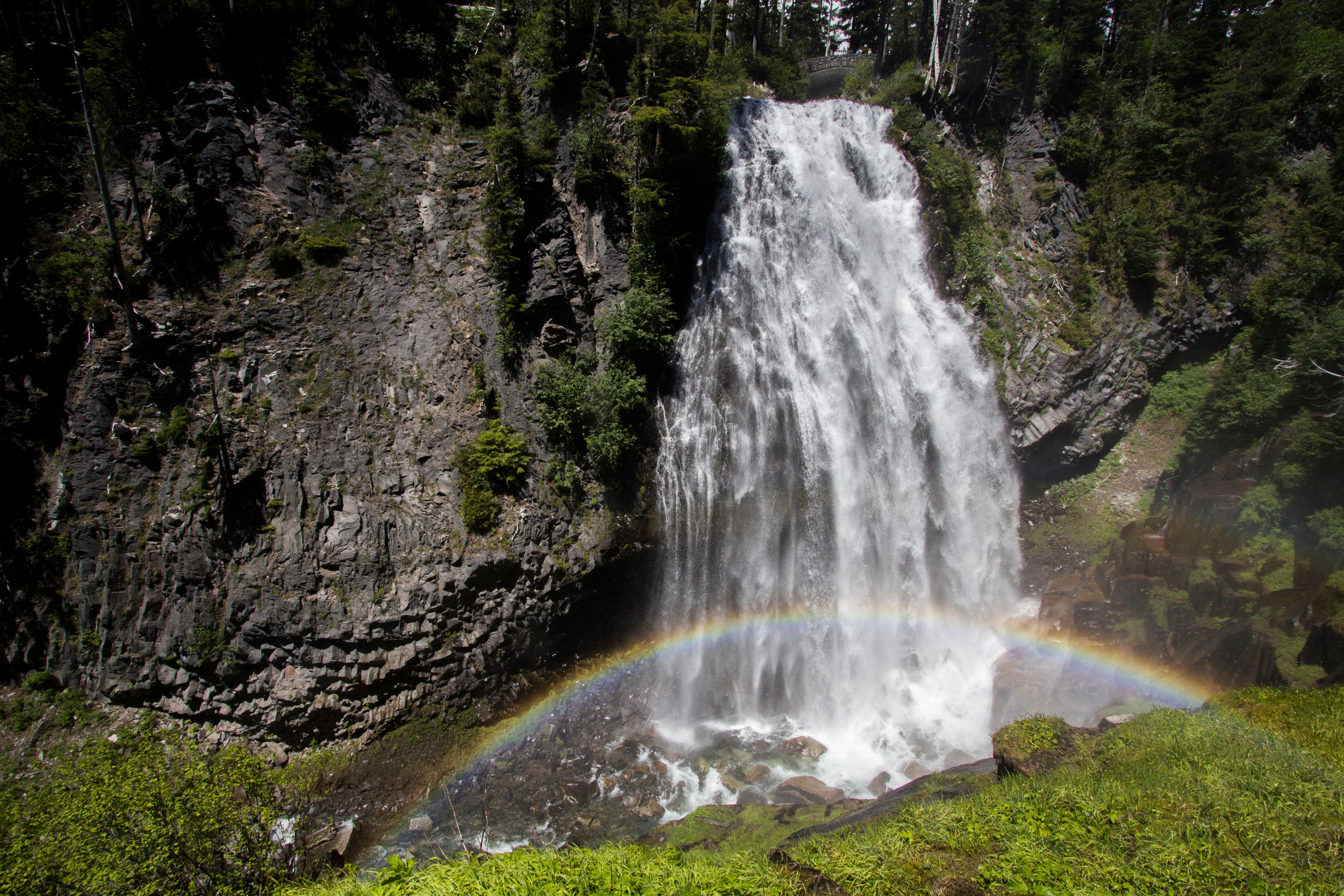
Ascending to 14,410 feet above sea level, Mount Rainier stands as an icon in the Washington landscape. An active volcano, Mount Rainier is the most glaciated peak in the contiguous U.S.A., spawning five major rivers. Subalpine wildflower meadows ring the icy volcano while ancient forest cloaks Mount Rainier’s lower slopes. Wildlife abounds in the park’s ecosystems. A lifetime of discovery awaits.
- NPS site
- nps.gov/mora
- Location
- Mount Rainier National Park (46.861, -121.704)

Track your visit to Mount Rainier National Park
NP Tracker keeps a record of every National Park Service unit you visit — all 430-plus of them. Log visits with dates and photos, collect passport stamps, plan trips, and watch your map fill in. It's free.
Passport stamp locations
- Henry M Jackson Memorial Visitor Center
- Longmire Museum
- Ohanapecosh Visitor Center
- Sunrise Visitor Center
Hours
Mount Rainier National Parktoday: All Day
- Sat Oct 3All Day
- Sun Oct 4All Day
- Mon Oct 5All Day
- Tue Oct 6All Day
- Wed Oct 7All Day
- Thu Oct 8All Day
- Fri Oct 9All Day
Mount Rainier National Park is open all year. Visitation peaks in July and August with warmer weather and blooming wildflowers. In spring and autumn, weather determines the availability of facilities and roads. During winter months a number of roads, facilities, and entrances close for the season.
Nisquallytoday: All Day
- Sat Oct 3All Day
Visitor centers
8
- Carbon River Ranger Stationclosed todayDirections
- Henry M Jackson Memorial Visitor Centertoday: 9:30AM - 4:00PMDirections
- Longmire Museumtoday: 9:00AM - 4:30PMDirections
- Longmire Wilderness Information Centertoday: 7:30AM - 5:00PMDirections
Self-guided tours
10
Glaciers of Mount Rainier30 minutes · 11 stops
Mount Rainier is the most glaciated peak in the contiguous United States with 28 named glaciers, plus numerous unnamed snowfields. Learn more about the major glaciers in this virtual tour, starting in clockwise order around the mountain with Carbon Glacier in the north.
Historic Patrol Cabins and Shelters30 minutes · 15 stops
Prior to 1920, there were very few shelters for backcountry rangers and hikers. In 1919-20, Superintendent Roger W. Toll reported the need for backcountry shelters to be placed ten to fifteen miles apart along the Wonderland Trail. Toll's system evolved into the construction of both patrol cabins and trail shelters under Superintendent O.A. Tomlinson's administration (1923-41).
Journey to Paradise4–8 hours · 8 stops
Enter the Nisqually Entrance in the southwest corner of Mount Rainier National Park and begin the journey to Paradise. Drive along a historic winding road through old-growth forest with glimpses of Mount Rainier. Stretch your legs by walking short nature trails and viewing waterfalls. Visit Longmire, the park’s first settlement, before concluding your tour in the subalpine meadows of the Paradise area. While Paradise is open year-round, in winter the road past Longmire closes nightly.
Longmire Historic District Walking Tour
Entrance fees
4
- Private Vehicle — $30.00
Grants unlimited entry for one vehicle and passengers for seven consecutive days. Vehicle must be private, noncommercial, and with a seating capacity of 15 or less.
- Per Person — $15.00
Walk-up or single bicycle fee. Grants unlimited entry for seven consecutive days.
- Motorcycle — $25.00
Valid for 7 days. Admits up to 2 private, non-commercial motorcycles with up to 4 total passengers.
- Annual Entrance - Park — $55.00
Grants unlimited entry for one year to pass owner and passengers in a single, private, non-commercial vehicle. This pass does not cover camping fees and is non-transferable and non-refundable. If you already own a valid annual or lifetime pass (Interagency Senior, Annual, Military, etc) you do not need to purchase this pass. NOTE: The Discover Pass is for Washington State Parks only and does not cover Mount Rainier National Park.